
Heavy Duty Sand Scoop for Wet Sand and Tough Beach Conditions
All for Metal Detection. Find More. Fill More.
CKG creates practical gear for people who love metal detecting, beach hunting and outdoor treasure recovery. Our sand scoops, shovels, handles and accessories are made to help detectorists search longer, recover targets faster and enjoy every hunt with more confidence.
From dry sand to wet beaches, from casual weekend searches to serious detecting sessions, CKG tools are built for real conditions and real finds.
Find more. Fill more. Hunt with CKG.
Featured collection


Choose the Right Metal Detecting Gear

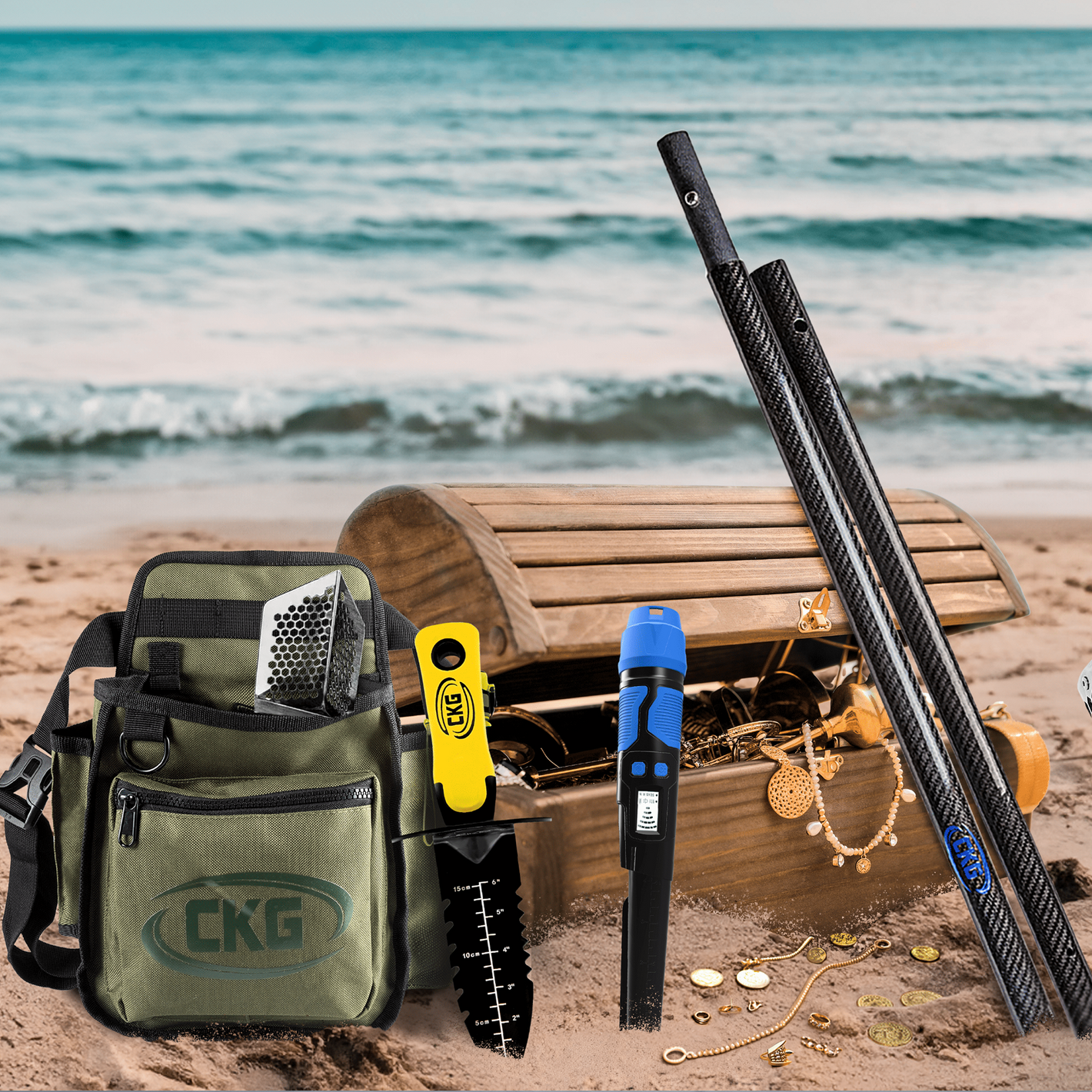

How to choose
-
For dry sand
Choose a lightweight scoop with fast sifting holes. It will be easier to carry and use during long beach walks.
-
For wet sand
Pick a stronger scoop with a reinforced basket. Wet sand is heavier, so the scoop should feel stable when lifting material.
-
For shells, gravel and pebbles
Use a durable metal scoop with holes that allow sand to fall through while keeping coins, rings and jewelry inside.
-
For shallow water detecting
A long handle and corrosion-resistant material are more important. This helps you recover targets without bending too much.
-
For long detecting sessions
Titanium is a good premium choice because it keeps the setup lighter. Stainless steel is a strong and more affordable option for regular use.
Video
Video
Video
Video
Video
Heavy Duty Sand Scoop for Wet Sand and Tough Beach Conditions
A heavy duty sand scoop is made for the part of beach detecting where a light scoop starts to feel weak. Dry sand is usually easy. It falls through the basket fast, and recovery does not take much force. Wet sand, packed sand, shells, pebbles and rocky areas are different. They put pressure on the basket, the welds and the handle connection every time you dig.
For regular beach hunting, a sand scoop is essential gear. It is not just something to carry because other detectorists use one. A real heavy duty beach scoop helps you dig, lift, drain and recover targets without fighting the sand every few minutes. If you search wet sand, shallow water, shell beds or gravel beaches, a stronger scoop can make the whole hunt less frustrating.
People who buy heavy duty sand scoop gear usually look for more than a basic beach tool. They want a durable sand scoop that can handle rough beach conditions, repeated digging and heavier material. A good scoop is not always cheap, but in tough conditions a cheap scoop can bend, crack or become uncomfortable very quickly.
Why Wet Sand, Rocks and Shells Need a Stronger Scoop
Wet sand is the real test. Loose dry sand may fall through almost by itself, but wet sand is heavier and often sticks inside the basket. When you push into packed wet sand, the scoop has to cut into the material, hold its shape and lift a heavy load. This is where a heavy duty sand scoop for wet sand becomes useful.
Packed sand needs a stronger basket because it creates more resistance. Shell areas need a reinforced scoop because sharp shells and dense layers can stress the metal. Coarse sand, cobble, coral pieces, gravel and pebbles are also harder on the basket than soft beach sand. If the scoop is too light or poorly supported, rough ground can bend weaker scoops over time.
A heavy duty metal detecting scoop for rocks or shells should feel solid when you push it into the beach. It should not twist too much, flex too much or feel loose near the handle. Heavy wet sand puts pressure on the scoop, so the basket and handle support need to work together. Fast drainage also matters. A strong scoop is helpful, but if it holds too much water and sand, every recovery becomes heavier than necessary.
Heavy Duty Beach Scoop vs Lightweight Dry Sand Scoop
Different scoops work better in different beach conditions. A dry sand scoop can be lighter because dry sand sifts quickly and does not create much resistance. For towel lines and soft upper beach areas, a lighter scoop may be enough. Short handle scoop for dry sand can also be convenient when you are working shallow targets and do not need heavy leverage.
A water scoop should be heavier and sturdier. Wet sand, surf line areas and shallow water demand more strength. A heavy duty beach scoop for shell beds or rocky beach conditions has to handle pressure that a lightweight scoop was not built for. Heavy corals and rough bottom can bend weaker scoops, especially when the user starts prying or lifting packed material.
That is why choosing the right scoop depends on beach conditions. A lightweight dry sand scoop is good for speed. A heavy duty metal detector scoop for water hunting is better for strength. Some detectorists use one scoop for everything, but many experienced beach hunters understand that different scoops for different beach conditions can make more sense.
Reinforced Sand Scoop for Rocky Beaches, Pebbles and Shell Beds
A reinforced sand scoop for rocky beach detecting should be built around the areas that take the most stress. The bottom of the basket, the sides, the front lip and the handle connection all matter. A rugged sand scoop for shell beds needs more support than a scoop used only in soft sand.
A reinforced sand scoop for wet sand or packed beach material should have a solid basket that does not collapse under pressure. A reinforced beach scoop for water hunting should also drain well, because a basket full of wet sand and water gets heavy fast. Large drainage holes, smart hole placement and a strong shape can help with faster recovery.
If you are looking for a sand scoop for pebbles and shells, avoid thinking only about size. A large basket moves more material, but it also gets heavier when full. A strong beach scoop for rocky areas should feel manageable, not just oversized. The best heavy duty beach scoop is the one that gives enough strength without making every target feel like hard work.
Why Welds, Basket Strength and Handle Support Matter
Welds, basket strength and handle support are often more important than they look in product photos. The handle connection is one of the weak points on many scoops. Every time you push, twist or lift packed wet sand, pressure goes through that area. If the mount is poorly supported, the scoop may loosen, crack or fail faster than expected.
A sand scoop with welded gussets or a reinforced handle area can be a better choice for tough beach conditions. Welded gussets help support the connection between the handle and the basket. Strong welds matter because dense wet sand and rocks stress the scoop again and again.
A sand scoop with reinforced basket or reinforced bottom is also useful if you search shell beaches, gravel beaches or rocky beach areas. A weak basket may look fine at first, but rough sand can quickly show its limits. If you plan to shop reinforced sand scoop products, check how the basket is built, not only how it looks.
Heavy Duty Stainless Steel Sand Scoop or Heavy Duty Titanium Sand Scoop?
Many detectorists compare a heavy duty stainless steel sand scoop with a heavy duty titanium sand scoop before buying. Both can work well, but they offer different advantages.
A heavy duty stainless steel sand scoop with handle is usually strong, dependable and more affordable than titanium. Stainless steel is a common choice for wet sand, shell beds and saltwater beach conditions. If you want a durable beach scoop for ocean detecting or a strong sand scoop for packed sand, stainless steel can be a practical option.
A heavy duty titanium sand scoop with handle is usually lighter. Titanium is useful for detectorists who want strength without carrying as much weight. It can be a good choice for long hunts, especially when paired with a carbon fiber handle. The downside is price. A premium metal detecting scoop with carbon handle may cost more, but it can reduce fatigue during long beach sessions.
The best choice depends on how often you hunt, where you hunt and how much weight you want to carry. A professional sand scoop depends on hunting area, not only on material. For rough saltwater conditions, both stainless steel and titanium can work, but construction quality still matters.
Professional Sand Scoop for Water Hunting and Deep Targets
A professional sand scoop for water hunting needs to do more than dig dry sand. It should handle heavier loads, deeper targets and moving water. A long handle scoop for water helps reduce bending and gives better leverage when digging in wet sand or shallow water.
A pro beach scoop for deep targets should have a basket strong enough to lift more material at once. But bigger is not always better. A large basket can help with deep targets, yet it also becomes heavier when full of wet sand. The best heavy duty scoop for water hunting should feel balanced enough to use repeatedly.
A professional metal detecting scoop for beach use should also help with target recovery. Fast drainage matters because water and sand need to leave the basket quickly. A scoop that drains poorly makes every lift heavier. For wet sand and surf line areas, fast sand release and a stable basket can save a lot of effort.
If you are looking to buy professional sand scoop equipment, pay attention to the basket depth, hole pattern, handle length and reinforced areas. These details affect real use more than simple product labels like premium or pro.
How to Choose a Rugged Sand Scoop for Beach Metal Detecting
To choose a rugged sand scoop for beach detecting, start with the ground you search most often. If you hunt mostly dry sand, a lighter tool may be enough. If you spend time in wet sand, packed sand, shell beds, rocks, pebbles or gravel, choose a stronger scoop.
A sand scoop for tough beach conditions should have a reinforced basket, strong welds and a secure handle connection. A sand scoop for shell beach metal detecting should be able to handle sharp shell layers without feeling flimsy. A sand scoop for gravel beach detecting should have enough strength to lift heavier material without too much flex.
For wet sand, look for a heavy duty sand scoop with long handle or a sand scoop with carbon fiber handle for wet sand. A long handle saves your back, while a carbon fiber handle can reduce weight. This combination is especially useful when the basket itself is made from stainless steel or another strong material.
If you are searching for the best heavy duty sand scoop for metal detecting, avoid choosing only by price or size. Think about how it will feel after two hours of digging. Think about the beach you actually hunt. Think about whether you need a professional beach scoop for water hunting, a reinforced sand scoop for rocky beach use, or a rugged metal detecting scoop for tough conditions.
Why a Good Scoop Is Not Always Cheap
A good scoop is not always cheap because the parts that matter cost more to build. Strong welds, reinforced construction, better materials, a stable handle mount and a durable basket all affect the final price. A cheap scoop may be fine for occasional dry sand hunting, but wet sand and rough beach conditions can expose weak construction quickly.
If you see a heavy duty sand scoop for sale, check more than the name. “Heavy duty” should mean something in the design. Look for reinforced areas, basket strength, weld quality, material type and handle support. The same applies when you shop heavy duty beach scoop or shop professional sand scoop products online.
For detectorists who hunt often, it can be smarter to buy reinforced sand scoop gear once than to replace weaker scoops again and again. A premium sand scoop for metal detecting should make recovery more reliable, not just look better. A professional beach scoop for water hunting should feel stable in wet sand, shells, pebbles and shallow water.
When deciding where to buy heavy duty sand scoop equipment, look for clear product details. If you are comparing a heavy duty sand scoop for sale, heavy duty beach scoop for sale, professional sand scoop for sale or rugged sand scoop for sale, check whether the scoop is built for the conditions you actually face. Wet sand, rocks, shell beds and gravel beaches are not gentle on tools. The right scoop should be ready for that.