
Metal Detecting Carry Bag for Safe Gear Storage and Transport
All for Metal Detection. Find More. Fill More.
CKG creates practical gear for people who love metal detecting, beach hunting and outdoor treasure recovery. Our sand scoops, shovels, handles and accessories are made to help detectorists search longer, recover targets faster and enjoy every hunt with more confidence.
From dry sand to wet beaches, from casual weekend searches to serious detecting sessions, CKG tools are built for real conditions and real finds.
Find more. Fill more. Hunt with CKG.
Featured collection


Choose the Right Metal Detecting Gear

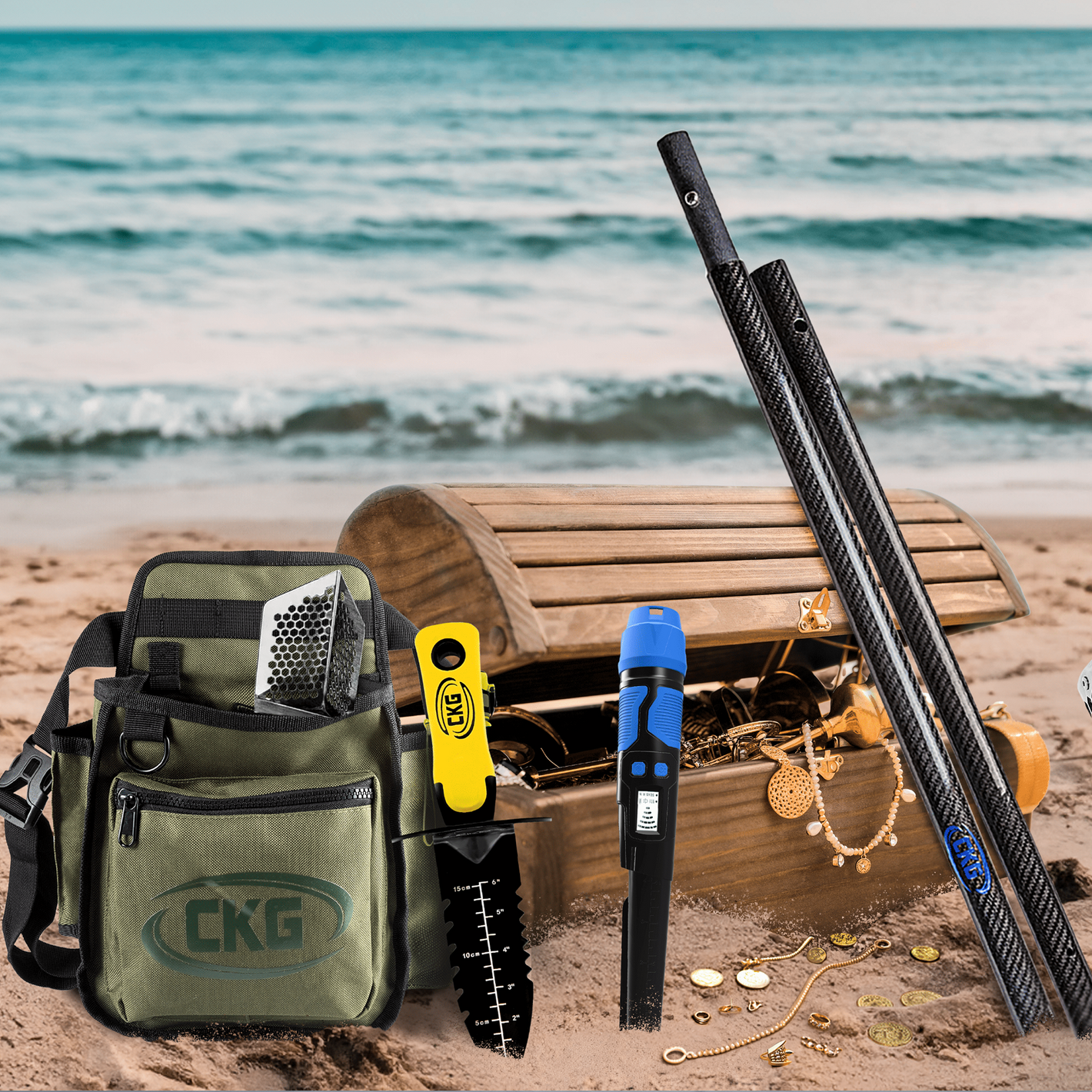

How to choose
-
For dry sand
Choose a lightweight scoop with fast sifting holes. It will be easier to carry and use during long beach walks.
-
For wet sand
Pick a stronger scoop with a reinforced basket. Wet sand is heavier, so the scoop should feel stable when lifting material.
-
For shells, gravel and pebbles
Use a durable metal scoop with holes that allow sand to fall through while keeping coins, rings and jewelry inside.
-
For shallow water detecting
A long handle and corrosion-resistant material are more important. This helps you recover targets without bending too much.
-
For long detecting sessions
Titanium is a good premium choice because it keeps the setup lighter. Stainless steel is a strong and more affordable option for regular use.
Video
Video
Video
Video
Video
Metal Detecting Carry Bag for Safe Gear Storage and Transport
A metal detecting carry bag is one of those things people often buy only after they get tired of carrying gear in three different ways. At first, it seems easy enough. The detector goes in the car, the headphones go somewhere in the back seat, the pinpointer gets tossed into a pouch, and the shovel or scoop rides loose beside everything else. It works for a while, but it is not very organized.
After a few trips, the problem becomes obvious. A coil gets scratched. A shaft rubs against a digging tool. Headphones disappear under a jacket. The pinpointer ends up in the wrong pocket. If you travel, hike to detecting spots, or keep your gear in a vehicle, a proper metal detecting storage bag starts to make a lot more sense.
A good detector carry case is not just about looking neat. It helps with safe transport, detector protection, gear protection and organized storage. It gives your metal detector, search coil, shaft, headphones, pinpointer, finds pouch, shovel and accessories a place to go before and after the hunt. That small bit of order can save time every time you leave the house.
Why a Metal Detecting Carry Bag Matters
Metal detecting gear is not always heavy, but it can be awkward to carry. A detector has a long shaft and coil. A shovel or sand scoop has sharp or dirty edges. A pinpointer, headphones, batteries, gloves, cords and small accessories are easy to lose if they are not stored together.
A metal detecting gear bag helps keep the setup in one place. Instead of checking the garage, truck, backpack and pockets before each trip, you can keep the main items packed and ready. This is especially useful for detectorists who like quick after-work hunts or weekend trips.
A metal detecting equipment bag also protects the gear during transport. A soft detector bag with padded protection can reduce scratches and bumps. A padded detector bag or protective detector bag is useful when the detector rides in a car with other tools, boots, water bottles or outdoor gear.
For many detectorists, the best metal detecting carry bag is simply the one that keeps everything together and does not make the hobby feel messy. It should be practical, not complicated.
Detector Storage and Gear Organization
Good detector storage starts with the main compartment. A large main compartment should hold the detector or at least the main parts of it: coil, shaft and control housing. Some people prefer a full size bag that lets the detector fit with minimal disassembly. Others prefer compact storage and do not mind breaking the detector down.
A metal detector storage bag should also have room for accessories. Zippered pockets, side pockets, accessory pockets and tool pockets help keep smaller items from floating around the bag. A pinpointer should not be scraping against the control box. Headphones should not be crushed under a shovel. Charging cords and batteries should not be buried at the bottom.
A metal detecting bag with compartments makes this easier. A detector compartment can hold the main machine. An accessory compartment can hold headphones, gloves, batteries or a small tool kit. A separate pocket can be used for a pinpointer, finds pouch or extra coil cover.
Equipment organization matters more when you carry more than the basics. Some detectorists bring a pinpointer, shovel, hand digger, finds pouch, headphones, spare batteries, charging cable, marker flags, water and small cleaning tools. Without a proper storage bag for detecting gear, all of that becomes clutter fast.
Padded Detector Bag for Protection
A padded detector bag is useful if you care about keeping the detector protected during transport. Metal detectors are field tools, but that does not mean they should be thrown around. The coil, shaft and control box can still get scratched, bumped or pressed against harder tools.
A metal detector padded soft case gives a softer interior around the detector. A padded interior or soft interior helps protect the control box and coil from rubbing against other gear. It is not the same as a hard case, but for normal vehicle transport and storage, it is often enough.
A padded carry bag for metal detector is also useful if you keep your detector in a closet, garage or trunk. It protects the machine from dust, bumps and other equipment. If you travel often, a metal detector transport case or metal detector travel case may be better, especially if the detector will be handled roughly.
A protective detector case should match the way you transport your gear. For local hunts, a soft case may be fine. For flights, checked baggage or long trips, a stronger travel case may be worth considering.
Carry Bag for Detector and Accessories
A carry bag for metal detector and accessories should be more than a long sleeve for the detector. The best bag for metal detector and accessories gives space for the full detecting setup. That means detector, coil, shaft, headphones, pinpointer, finds pouch, gloves, small tools and maybe even a compact shovel or trowel.
A metal detecting bag for detector and gear helps when you want one grab-and-go setup. Everything is already in the bag, so you are less likely to forget something important. This is useful for beginners, but also for experienced detectorists who own several machines and want each setup organized.
A metal detecting bag for pinpointer and tools should keep those items easy to reach. The pinpointer is one of the most used accessories, so it should not be lost under the detector. A metal detecting bag for shovel and accessories should have a strong layout, especially if the shovel is sharp or dirty after a hunt.
A metal detecting bag for headphones and pinpointer is useful because these smaller items can break or disappear more easily than the detector itself. A storage bag should protect them, not just carry them.
Travel Bag for Detecting Gear
A travel bag for detecting gear is useful when the hunt is not five minutes from home. If you drive to fields, hike into wooded spots, visit beaches or travel with a detector for work or vacation, transport becomes part of the hobby.
A detector transport bag should make travel less awkward. A carry handle is fine for short distances. A shoulder strap or adjustable shoulder strap is better when you walk farther. Backpack straps can be useful when the detector, shovel and accessories need to be carried over longer distances.
A metal detecting backpack works well for detectorists who like to hike to sites. A backpack for metal detecting gear can hold the detector, pinpointer, pouch, water, snacks, gloves, small tools and extra accessories. The trade-off is size. A backpack can be comfortable, but it needs enough length or attachment options for detector parts.
For travel storage, compact design matters. Some bags are made for full size detector transport, while others are better for broken-down equipment. A foldable storage option can be useful when space is limited.
Durable Fabric and Outdoor Use
A metal detecting carry bag spends time in cars, fields, beaches, garages and muddy parking areas. It should be made from durable fabric, not thin material that tears after a few trips. Heavy duty fabric is better if the bag carries tools, coil parts or outdoor accessories.
Water resistant fabric is useful because detecting gear is often dirty or damp. You may pack the bag after a rainy hunt, beach trip or muddy field session. A waterproof fabric can be even better in rougher conditions, but the zipper design and stitching matter too. A bag is only as protective as its weakest point.
A rugged bag should have reinforced handles if it is expected to carry more than a light detector. Handles take a lot of stress when the bag is full of equipment. A weak handle can fail at the worst moment.
A lightweight bag is better for casual use and short transport. A heavier protective bag may be better for travel or rough storage. The right choice depends on how much gear you carry and how often you move it.
Metal Detecting Backpack or Carry Case?
A metal detecting backpack and a detector carry case solve slightly different problems. A carry case is usually better for protecting and transporting the detector itself. A backpack is usually better for carrying mixed field gear.
If you want clean detector storage at home or in the vehicle, a padded detector case may be the better choice. If you want to walk into fields, woods or remote locations with your detector and accessories, a metal detecting backpack may be more practical.
A detectorist gear bag can sit somewhere between the two. It can hold the detector plus accessories, but still be easier to carry than a hard case. The best detectorist gear bag should match your hunting style: quick local hunts, beach trips, field detecting, travel or day hikes.
Some detectorists prefer a dedicated metal detector carry bag plus a separate finds pouch on the belt. Others prefer one larger bag that carries everything until they reach the site. There is no single perfect setup. The right system is the one that keeps your gear protected and easy to use.
Storage Bag for Detecting Gear
A storage bag for detecting gear is helpful even when you are not traveling. At home, it keeps the detector and accessories from spreading across the garage, closet or car. After the hunt, it gives you one place to put everything back.
A metal detecting gear storage bag should have enough compartments to keep equipment organized. Coil storage, shaft storage, headphone storage, pinpointer storage, finds pouch storage and shovel storage are all useful depending on your setup.
A metal detector accessory storage bag can also keep smaller items together: batteries, USB charging cables, coil bolts, gloves, cleaning cloth, spare parts and manuals. These little things are easy to lose.
If you own more than one detector, organized storage becomes even more important. Different coils, shafts, headphones and chargers can get mixed up. A good metal detecting equipment storage bag helps avoid that.
How to Choose the Best Metal Detecting Carry Bag
The best metal detecting carry bag depends on your detector size, accessories and travel habits. Start with the main question: do you want full size storage or compact storage? A full size bag may let you keep the detector mostly assembled. A compact bag may require disassembly but takes less room.
Next, check padding. A padded metal detector carry bag is better if the detector rides with other gear. A protective metal detector bag with a soft interior helps prevent scratches. If you transport the detector often, padding is worth it.
Then look at pockets. A metal detector bag with pockets or metal detector bag with accessory pockets helps organize small gear. If the bag has only one open space, everything will eventually mix together.
Also check carry options. A shoulder strap is useful. Backpack straps may be better for longer walks. Reinforced handles are important if the bag will be loaded with tools and accessories.
A universal metal detector carry bag can work for different detectors, but always check length and fit. Universal fit is useful only if the bag actually fits your detector and accessories.
Buying a Metal Detecting Carry Bag Online
When you buy metal detecting carry bag online, compare more than the price. Look at size, padding, compartments, material, handle strength, zipper quality and carry options. A metal detecting carry bag for sale should clearly show whether it is made for detector storage, transport, travel or full gear organization.
If you shop metal detecting carry bag products, check whether the bag is in stock and what dimensions it has. A metal detecting carry bag online should list enough details to know whether your detector, coil, shaft and accessories will fit.
Searches like where to buy metal detecting carry bag, where to buy detector carry case, where to buy metal detector carry bag or where to buy metal detecting gear bag usually come from people who already know they need better storage. The goal is not just to buy any bag. The goal is to buy one that protects the detector and keeps the rest of the gear organized.
A good bag makes the whole hobby smoother. The detector is protected. The headphones have a pocket. The pinpointer is easy to find. The finds pouch, shovel and accessories stay together. When everything has a place, getting out for a hunt becomes much easier.