
Metal Detecting Finds Bag for Organized Target Recovery
All for Metal Detection. Find More. Fill More.
CKG creates practical gear for people who love metal detecting, beach hunting and outdoor treasure recovery. Our sand scoops, shovels, handles and accessories are made to help detectorists search longer, recover targets faster and enjoy every hunt with more confidence.
From dry sand to wet beaches, from casual weekend searches to serious detecting sessions, CKG tools are built for real conditions and real finds.
Find more. Fill more. Hunt with CKG.
Featured collection


Choose the Right Metal Detecting Gear

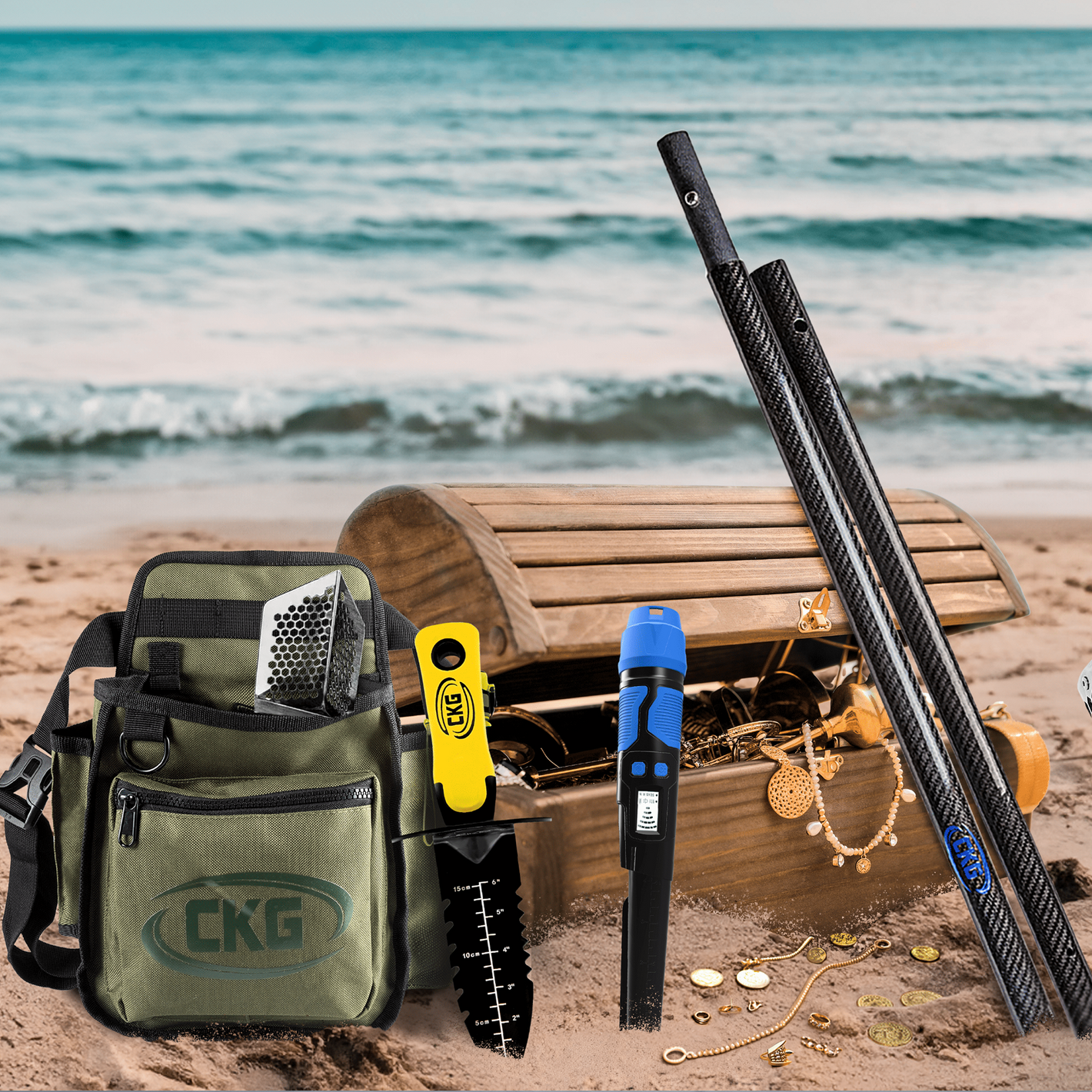

How to choose
-
For dry sand
Choose a lightweight scoop with fast sifting holes. It will be easier to carry and use during long beach walks.
-
For wet sand
Pick a stronger scoop with a reinforced basket. Wet sand is heavier, so the scoop should feel stable when lifting material.
-
For shells, gravel and pebbles
Use a durable metal scoop with holes that allow sand to fall through while keeping coins, rings and jewelry inside.
-
For shallow water detecting
A long handle and corrosion-resistant material are more important. This helps you recover targets without bending too much.
-
For long detecting sessions
Titanium is a good premium choice because it keeps the setup lighter. Stainless steel is a strong and more affordable option for regular use.
Video
Video
Video
Video
Video
Metal Detecting Finds Bag for Organized Target Recovery
A metal detecting finds bag is one of those pieces of gear that feels simple until you forget it at home. At first, many beginners think any pocket will do. A few coins can go into one pocket, bottle caps into another, and the pinpointer can be carried by hand. That works for about ten minutes. Then the trash starts mixing with the good finds, the digger gets dirty, the pinpointer is always in the wrong place, and every recovery feels less organized than it should.
A good metal detecting finds pouch solves that problem. It gives recovered targets, trash, tools and small accessories a place to go while you are still moving through the field, park, beach or old home site. It is not just storage. It is part of the whole target recovery routine.
When you hear a signal, dig the target and pull something out of the ground, you need to decide quickly where it goes. Valuable finds should not be thrown in with rusty nails or muddy bottle caps. Trash should not end up back on the ground. A pouch for finds and trash helps keep the hunt cleaner and more efficient.
Why Finds and Trash Separation Matters
Metal detecting is not only about finding coins, relics and jewelry. Most hunts produce a lot of trash too. Pull tabs, foil, nails, bottle caps, wire, bits of iron and broken metal are part of the day. If you do not have proper trash storage, all of that either ends up in your pockets or, worse, gets left behind.
A finds and trash pouch makes separation easy. One pocket can be used for dirty finds and trash. Another can be used for coin storage, relic storage or jewelry storage. Smaller inner pockets can hold valuable finds that you do not want scratched or lost. This simple setup keeps recovered finds organized and makes it easier to check everything later.
A good detectorist finds pouch should make it natural to separate treasure and trash. You recover the target, check it, drop trash into one compartment and keep small finds somewhere safer. It sounds basic, but after a few hours outside it makes a big difference.
For coin hunting, a coin hunting pouch helps keep coins away from sharp junk. For relic hunting, a relic hunting pouch gives space for old buttons, brass pieces, small buckles and other field finds. For beach detecting, a finds pouch is useful because sand, coins, pull tabs and small jewelry can all end up together very quickly.
Metal Detecting Finds Bag vs Regular Pocket
A regular pocket is not made for metal detecting. It has no trash separation, no pinpointer pocket, no digger holder, no drainage and usually no easy access once your hands are dirty. A metal detecting finds bag is built for the way detectorists actually move.
During a hunt, your hands may be muddy, sandy or wet. You may be holding a detector in one hand and a digging tool in the other. You may need to put away a recovered target quickly and keep walking. A waist pouch for metal detecting or metal detecting belt pouch keeps storage at your side where you can reach it without stopping.
Hands free carry is one of the biggest advantages. A belt mounted pouch, hip pouch or waist carry setup lets you swing the detector, use a pinpointer, cut a plug and carry recovered finds without juggling everything. The pouch becomes part of your rhythm.
This is why many detectorists prefer a dedicated detectorist pouch over a normal bag. It is faster, cleaner and better organized.
Pinpointer Holder, Digger Pocket and Tool Organization
A metal detecting pouch with pinpointer holder is useful because a pinpointer is used constantly. If the pinpointer is buried in the main pocket, recovery slows down. A pinpointer holder, pinpointer pocket or pinpointer compartment keeps it ready.
The same applies to a digger. A metal detecting digger pouch or metal detecting pouch for digging tool keeps the hand digger where you can reach it quickly. A digger holder, digger pocket or tool pocket is especially useful when you are moving through parks, fields or woods and do not want to keep setting tools on the ground.
A metal detecting pouch for pinpointer and tools should be simple. The pinpointer should slide in and out easily. The digger should stay secure. The main pocket should have enough room for recovered targets and trash. Extra storage is helpful, but too many tiny pockets can become annoying if you cannot remember where anything is.
A pinpointer and digger pouch is often one of the most practical setups for everyday detecting. It keeps the two recovery tools you use most close to your hand. That means quick access, less bending around for gear and fewer lost tools in tall grass or soft sand.
Pouch for Finds and Trash
A pouch for finds and trash should have at least two useful areas. The main pocket can handle trash storage and dirty finds. A separate pocket or inner pocket can hold better targets. If the pouch has a zippered pocket, it can be used for small valuable finds like rings, old coins, earrings or delicate relics.
The best pouch for finds and trash is not always the largest one. A large pocket is useful in high-trash areas, but if the pouch becomes too heavy, it starts pulling on your belt or waist. For long hunts, comfort matters. A compact pouch can be better if you usually recover small targets and do not want extra bulk.
For beach detecting, mesh pockets and water drainage holes are useful. Sand, mud and water need somewhere to go. A washable pouch or mesh pouch can be easier to clean after wet sand, muddy fields or rainy conditions. Breathable mesh also helps prevent the pouch from turning into a damp mess after a long day outside.
For field detecting, a rugged pouch with durable fabric and secure storage is more important. Field finds may be dirty, sharp or oddly shaped. A heavy duty pouch can handle nails, scrap, lead, brass pieces and other recovered targets better than a light casual bag.
Waist Pouch, Belt Pouch or Hip Pouch
A metal detecting waist pouch is popular because it keeps everything close and balanced. The pouch sits at the waist, so recovered finds and tools are easy to reach. Some models come with an adjustable waist belt, while others attach to your own belt.
A metal detecting belt pouch is often more stable if you already wear a detecting belt with a digger, pinpointer and other accessories. A belt attachment, belt loop or MOLLE attachment can help secure the pouch and stop it from swinging around. A MOLLE pouch setup is useful for detectorists who like to customize their gear organization.
A metal detecting hip pouch can be more comfortable for people who do not want a bag directly in front. Hip carry keeps the pouch out of the way while still allowing quick access. This can be useful when bending, kneeling or walking through brush.
There is no single best carry style for everyone. Some detectorists like a waist pouch. Others prefer a belt pouch. Some use a tool belt pouch because it has strong pockets and good support. The best metal detecting finds pouch is the one that fits your body, your tools and your hunting style.
Best Metal Detecting Finds Bag for Different Hunts
The best metal detecting finds bag depends on where you search. For parks, you may want something compact with quiet storage, a pinpointer holder and enough room for trash. Parks usually require clean recovery and careful organization, so quick access and secure pockets matter.
For fields, a larger treasure hunting pouch can be useful. Field detecting often produces relics, iron, lead, old brass, scrap and odd-shaped finds. A field pouch or utility pouch gives more room for dirty finds and recovered targets.
For relic hunting, the best relic hunting pouch should have sturdy fabric, separate compartments and enough space for both trash and interesting pieces. Relics can be sharp, muddy or fragile. Keeping them separate from junk helps protect better finds.
For coin hunting, the best coin hunting pouch does not need to be huge. It should keep coins secure and make trash separation easy. A small zippered pocket can be useful for older coins or better finds.
For beach detecting, the best finds pouch for beach detecting should handle sand and moisture. Mesh pockets, drainage holes and washable materials are useful because beach finds are rarely clean when they come out of the sand.
Metal Detecting Pouch with Compartments
A metal detecting pouch with compartments is useful because not everything should go into one pocket. Good finds, trash, tools, pinpointer, digger and small accessories all need different storage.
A multi pocket pouch can have a main pocket, side pocket, large pocket, mesh pocket, inner pocket and zippered pocket. The main pocket is often used for trash. Smaller compartments can hold coins, jewelry or delicate finds. Side pockets can hold gloves, small tools or a pinpointer.
The best metal detecting pouch with compartments should still be easy to use. If the pouch is overbuilt and confusing, it slows the hunt down. The goal is organized storage, not complicated storage.
Secure storage matters too. A zippered pocket can protect rings and coins. A deep main pocket keeps trash from falling out. A pinpointer holder pouch keeps the pointer in place. A metal detecting pouch with tool pockets keeps the digger separate from finds.
For beginners, a simple design may be better than a large tactical-style bag. The best metal detecting pouch for beginners should be comfortable, easy to clean and easy to understand.
Durable Fabric, Mesh and Drainage
A finds pouch spends a lot of time around dirt, sand, mud and sharp trash. Durable fabric matters. A rugged pouch or heavy duty pouch should handle repeated outdoor use without tearing quickly. A field ready pouch should be able to carry dirty finds, rusty junk, coins, tools and accessories.
Mesh can be very useful, especially for beach and wet conditions. A mesh pouch allows sand and water to drain out instead of staying trapped inside. Water drainage holes, mud drainage and sand drainage make the pouch easier to clean. If you hunt beaches or muddy fields, this feature is worth considering.
A lightweight pouch is good for short hunts and casual detecting. A heavy duty pouch is better for long days, high-trash areas or relic hunting. A compact pouch works well when you want minimal gear. A larger utility pouch is better when you carry a pinpointer, digger, gloves, finds, trash and small accessories.
The right material depends on how rough your hunts are. If you mostly detect dry parks, a simple pouch may be enough. If you hunt beaches, fields and woods, durability and drainage become more important.
Buying a Metal Detecting Finds Bag Online
When you buy metal detecting finds bag online, check more than the price. Look at pocket layout, pinpointer holder, digger pocket, belt attachment, fabric, drainage and overall size. A metal detecting finds bag for sale should clearly show how tools and recovered targets are stored.
If you shop metal detecting finds pouch products, think about your setup. Do you carry a pinpointer? Do you use a hand digger? Do you separate good finds from trash? Do you need a zippered pocket for jewelry? Do you hunt wet sand or muddy fields? These questions matter more than the product name.
A metal detecting finds bag online should be practical. It should not be too bulky, but it should have enough space. It should be easy to carry, but not flimsy. It should keep gear organized without making every recovery slower.
Searches like where to buy metal detecting finds bag, where to buy metal detecting finds pouch, where to buy detectorist finds pouch or where to buy treasure hunting pouch usually come from people who already know they need better organization in the field.
Choosing the Right Finds Pouch
The right finds pouch should match your style of detecting. If you dig a lot of trash, choose a larger pouch with good trash storage. If you hunt jewelry and coins, choose secure inner pockets or zippered storage. If you carry a pinpointer and digger, choose a pouch for pinpointer and digger with dedicated holders.
A metal detecting waist pouch with pinpointer holder is a good all-around choice. A metal detecting belt pouch with pinpointer holder works well for people who already use a belt setup. A metal detecting tool pouch with pinpointer holder is useful if you carry several recovery tools. A metal detecting digger pouch with pinpointer holder is practical for target recovery because both tools stay close.
A good pouch keeps you moving. It gives you quick access to tools, keeps trash separate, protects valuable finds and makes cleanup easier after the hunt. It is not the flashiest piece of gear, but it is one of the ones you notice every time you recover a target.
When the pouch works well, you stop thinking about it. Good finds go in one place. Trash goes in another. The pinpointer returns to its holder. The digger slides back into its pocket. You close the plug and move on to the next signal.