
Metal Detecting Shovel for Clean Plugs, Roots and Field Digging
All for Metal Detection. Find More. Fill More.
CKG creates practical gear for people who love metal detecting, beach hunting and outdoor treasure recovery. Our sand scoops, shovels, handles and accessories are made to help detectorists search longer, recover targets faster and enjoy every hunt with more confidence.
From dry sand to wet beaches, from casual weekend searches to serious detecting sessions, CKG tools are built for real conditions and real finds.
Find more. Fill more. Hunt with CKG.
Featured collection


Choose the Right Metal Detecting Gear

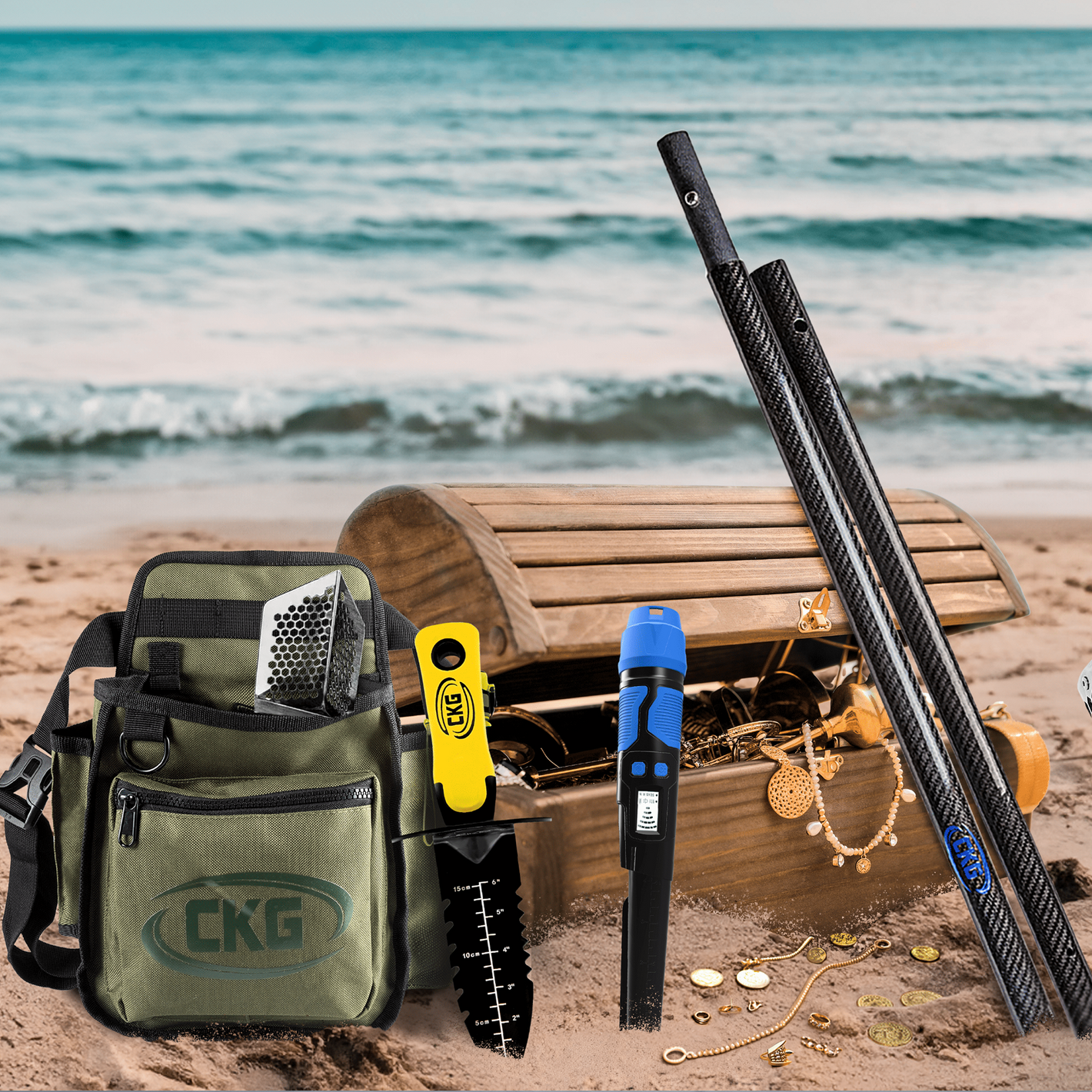

How to choose
-
For dry sand
Choose a lightweight scoop with fast sifting holes. It will be easier to carry and use during long beach walks.
-
For wet sand
Pick a stronger scoop with a reinforced basket. Wet sand is heavier, so the scoop should feel stable when lifting material.
-
For shells, gravel and pebbles
Use a durable metal scoop with holes that allow sand to fall through while keeping coins, rings and jewelry inside.
-
For shallow water detecting
A long handle and corrosion-resistant material are more important. This helps you recover targets without bending too much.
-
For long detecting sessions
Titanium is a good premium choice because it keeps the setup lighter. Stainless steel is a strong and more affordable option for regular use.
Video
Video
Video
Video
Video
Metal Detecting Shovel for Clean Plugs, Roots and Field Digging
A metal detecting shovel is not just a small spade you throw in the car “just in case.” After a few real hunts, most detectorists understand that the shovel affects almost everything: how clean the plug looks, how fast the target comes out, how tired your back feels, and whether the ground can be restored properly after digging.
At first, many beginners try a regular camping shovel, garden spade, or cheap folding shovel. Sometimes it works for soft soil. But once you start detecting in parks, fields, woods, old home sites, pasture, packed soil, hard soil, roots, or rocky soil, a basic tool quickly shows its limits. A good metal detecting shovel is made for target recovery, plug cutting, soil cutting, deep digging, and repeated outdoor use.
If you are looking to buy metal detecting shovel online, the best choice depends on where you hunt most often. A detectorist shovel for parks should help make a clean plug. A relic hunting shovel for fields may need a longer blade and rugged construction. A coin hunting shovel should offer control, not just power. A treasure recovery shovel needs to feel reliable when the signal is deeper than expected.
Why a Metal Detecting Shovel Matters
A detector finds the signal, but the shovel does the hard part. The moment you decide to dig, the tool needs to cut through grass, roots, packed soil, or field dirt without making a mess. A metal detecting shovel for clean plug cutting helps open the ground neatly, so the plug can be placed back after the target is recovered.
This matters a lot in parks and grass areas. A clean plug shows respect for the place and helps avoid leaving obvious damage behind. A sharp blade, narrow blade, or spade blade can make this easier. If the shovel tears the grass plug instead of cutting it, recovery becomes messy fast.
In fields and old home sites, the priorities change a little. You may need deeper digging, more leverage, and a blade that can handle roots or compacted soil. A field digging shovel or relic shovel should feel sturdy enough to work through harder ground without bending. That is where a heavy duty build, carbon steel blade, stainless steel blade, or heat-treated blade can be important.
A good digging shovel for treasure hunting should not feel like a toy. It should be field ready, comfortable in the hand, and strong enough for repeated use.
Best Metal Detecting Shovel for Beginners
The best metal detecting shovel for beginners is usually not the biggest shovel on the market. Beginners need a tool that is easy to control, not something that makes every hole too large. A compact detecting shovel or portable detecting shovel can be a better first choice because it helps teach cleaner recovery habits.
If you are new to the hobby, think about where you will actually hunt. For parks and yards, the best shovel for clean plugs is one that cuts neatly and does not look too aggressive. For fields, woods, and pasture, you may need more strength. For rocky soil or roots, a serrated shovel for metal detecting can be helpful.
A lightweight detecting shovel is also easier to carry during long hunts. When you already have a detector, pinpointer, pouch, gloves, and water, every extra pound matters. A best lightweight metal detecting shovel should still be strong enough for soil cutting and target retrieval, but comfortable enough to bring every time.
The shovel you use most is often the best one. If it is too heavy, too long, or awkward, it stays in the truck. If it is compact, comfortable, and strong, it becomes part of your normal detecting setup.
T-Handle Metal Detecting Shovel
A T-handle metal detecting shovel is popular because it gives good control when digging. The T-handle makes it easy to push, twist, and lift soil. A T-handle digging shovel can be useful in parks, fields, and relic sites where clean plug cutting and leverage both matter.
A T-handle relic hunting shovel or T-handle treasure hunting shovel usually feels stable when the ground is firm. The handle grip gives you a solid hold, and the shorter shape compared with some long shovels can make it easier to carry. A T-handle field shovel is a practical option for detectorists who want a balance between power and portability.
Some detectorists prefer a T-handle serrated shovel or T-handle double serrated shovel when roots are common. A T-handle root cutter shovel can help in woods, old home sites, and grassy areas where small roots cross the target. The serrated edge can work like a root saw, helping cut through the ground instead of forcing the blade through it.
A T-handle compact detecting shovel is also useful when you do not want to carry a full-size tool. It gives more leverage than a hand digger but is still easier to manage than a large digging spade.
D-Handle Metal Detecting Shovel
A D-handle metal detecting shovel gives a different feel. Some detectorists like the D-handle because it allows a firm grip with more hand positions. A D-handle digging shovel can be comfortable when lifting soil or working in heavier ground.
A D-handle shovel for metal detecting is often a good option for treasure hunting, relic hunting, or field detecting. It can feel more natural for people who are used to regular spades. A D-handle shovel for treasure hunting may also be easier to use when deeper digging is needed.
Carbon versions are popular with detectorists who want less weight. A D-handle carbon shovel, D-handle carbon fiber shovel, or carbon handle metal detecting shovel can reduce fatigue during long hunts. The carbon fiber handle or carbon fiber shaft helps keep the tool lighter without removing the strength needed from the blade.
The choice between T-handle and D-handle is personal. A T-handle may feel better for compact digging and plug cutting. A D-handle may feel better for lifting and deeper field work. The best D-handle metal detecting shovel or best T-handle metal detecting shovel is the one that fits your hand, your height, and your hunting style.
Serrated Shovel for Roots and Hard Soil
A serrated shovel for metal detecting is useful when you hunt places with roots, grass, packed soil, or old home sites. Roots can make a normal blade frustrating. A serrated blade, serrated edge, saw tooth edge, or root cutting edge helps the shovel cut instead of just pushing against the obstacle.
A double serrated shovel has teeth on both sides of the blade. This can help with root cutting from different angles, but it may also tear the plug more if the blade is used carelessly. A single serrated blade can be a good middle ground: one cutting side for roots and one smoother side for cleaner plug work.
A root cutter shovel or carbon root cutter shovel is useful in woods and older yards where roots are part of almost every hole. If you often detect around trees, old paths, foundations, or pasture edges, root cutting matters more than it does on soft open fields.
For parks, cleaner cutting is important. The best serrated shovel for metal detecting should help with roots without destroying the grass plug. A sharp blade and controlled digging are still more important than just having large teeth on the edge.
Carbon Metal Detecting Shovel
A carbon metal detecting shovel is designed for detectorists who want a lighter tool for long hunts. A carbon fiber metal detecting shovel or carbon fiber detecting shovel can make a noticeable difference when you carry gear for several hours.
The main advantage is reduced weight. A carbon fiber shovel for metal detecting usually uses a carbon fiber handle or shaft, while the blade remains steel or another strong metal. This gives a useful balance: a strong digging end with a lighter handle.
A carbon shovel for treasure hunting, relic hunting, or coin hunting is helpful when you walk fields, woods, or long permissions. A lightweight carbon detecting shovel can also be easier to carry in a vehicle or pack.
Still, the blade matters most when digging. A carbon shaft metal detecting shovel should still have a strong blade, stable handle connection, and rugged construction. Carbon fiber reduces weight, but the shovel still needs to handle packed soil, roots, and deep digging.
A carbon serrated shovel or carbon fiber serrated shovel can be a good choice when you want both lower weight and root cutting ability. For packed soil, fields, and long hunts, this type of shovel can feel much more comfortable than a heavy full-steel setup.
Relic Hunting Shovel, Coin Shovel and Field Digging
A relic hunting shovel is usually built for tougher ground than a simple coin shovel. Relic hunters often work fields, woods, old home sites, farm fields, and pasture. These places can have roots, rocks, compacted dirt, and deeper targets. A relic digging shovel or relic recovery shovel needs to be stronger and more rugged.
A field shovel for relic hunting should give enough depth and leverage without becoming too heavy. A serrated shovel for relic hunting helps when roots and packed soil are common. A carbon shovel for relic hunting can reduce fatigue on longer walks across fields.
A coin hunting shovel is usually more focused on clean target recovery. In parks, yards, and grass areas, the goal is to cut a neat grass plug, recover the coin, and replace the soil carefully. A shovel for coin hunting or coin recovery shovel should offer control and a clean blade shape.
For old coins and old home sites, you may need both control and strength. A shovel for old coins should not be too aggressive in grass, but it still needs to handle deeper targets. A metal detecting shovel for old home sites should be ready for roots, nails, packed soil, and mixed ground.
Compact, Portable and Folding Detecting Shovels
A compact detecting shovel is useful when you want a smaller tool that still performs better than a hand digger. It is easier to carry, easier to store, and less noticeable in public places. The best compact metal detecting shovel should still have a strong blade and comfortable handle.
A portable detecting shovel works well for detectorists who hike to sites, travel often, or carry a light setup. A portable metal detecting shovel for sale may be folding, short-handled, or built with a lightweight design. A folding detecting shovel is convenient for transport, but it must be sturdy enough for real digging.
Not every folding shovel is suitable for metal detecting. Some camping shovels can bend in hard soil or rocky ground. If you need a folding shovel for metal detecting, check the hinge, blade strength, handle lock, and overall build quality.
A lightweight metal detecting shovel for long hunts should save energy without becoming weak. The best portable metal detecting shovel is not just the smallest one. It is the one that survives repeated digging and still feels comfortable after hours outside.
How to Choose the Best Metal Detecting Shovel
To choose the best metal detecting shovel, start with the ground. For parks, look for clean plug cutting, a sharp blade, and good control. For fields, choose a stronger field spade or digging shovel. For woods and roots, choose a serrated edge shovel or root cutter shovel. For rocky soil, choose a blade with rugged construction and enough strength to handle pressure.
Handle type matters too. A T-handle metal detecting shovel gives good control and is popular for plug cutting. A D-handle detecting shovel gives a familiar grip and can feel better for lifting soil. An ergonomic handle, comfortable grip, and non slip grip can make a difference during long hunts.
Blade material is also important. A stainless steel blade resists corrosion and can be strong. A carbon steel blade or heat-treated blade can offer excellent toughness. Aircraft-grade steel is sometimes used in premium digging tools for added strength and durability.
If you search for the best metal detecting shovel for relic hunting, choose strength and depth. If you search for the best metal detecting shovel for coin hunting, choose plug control. If you need the best shovel for metal detecting in hard soil, choose blade strength and leverage. If you need the best shovel for metal detecting roots, choose a serrated blade or saw tooth edge.
Buying a Metal Detecting Shovel Online
When you buy metal detecting shovel online, do not choose only by price. Look at the blade material, handle type, length, weight, serration style, and intended use. A metal detecting shovel for sale should clearly explain whether it is made for parks, fields, relic hunting, coin recovery, roots, packed soil, or deep digging.
If you shop metal detecting shovel products online, compare real features. Does it have a T-handle or D-handle? Is it a carbon metal detecting shovel or full steel model? Does it have a serrated blade, double serrated edge, or smooth spade blade? Is it compact, folding, portable, or built for heavy duty field work?
For people searching where to buy metal detecting shovel, where to buy detectorist shovel, where to buy treasure hunting shovel, or where to buy relic hunting shovel, the best product is the one that matches the places you actually hunt.
A metal detecting shovel near me search may help if you need a tool quickly, but buying online can give more options: carbon metal detecting shovel for sale, T-handle metal detecting shovel for sale, serrated metal detecting shovel for sale, double serrated shovel for sale, portable metal detecting shovel for sale, and heavy duty metal detecting shovel for sale.
Why the Right Shovel Makes Detecting Easier
A good metal detecting shovel does not make every target valuable, but it does make recovery smoother. It helps cut clean plugs, reach deeper signals, work through roots, and return the ground neatly. It saves time, protects your hands, and makes long hunts more comfortable.
The right tool also changes how confident you feel. In soft soil, a simple shovel may be enough. In hard soil, packed ground, roots, rocky areas, fields, woods, and old home sites, a real detectorist shovel is worth having.
Whether you choose a T-handle shovel, D-handle shovel, carbon fiber detecting shovel, serrated shovel, compact shovel, or relic hunting shovel, the goal is the same: clean target recovery with less effort. A good shovel becomes part of your rhythm. Detect, cut, lift, recover, replace the plug, and move on.