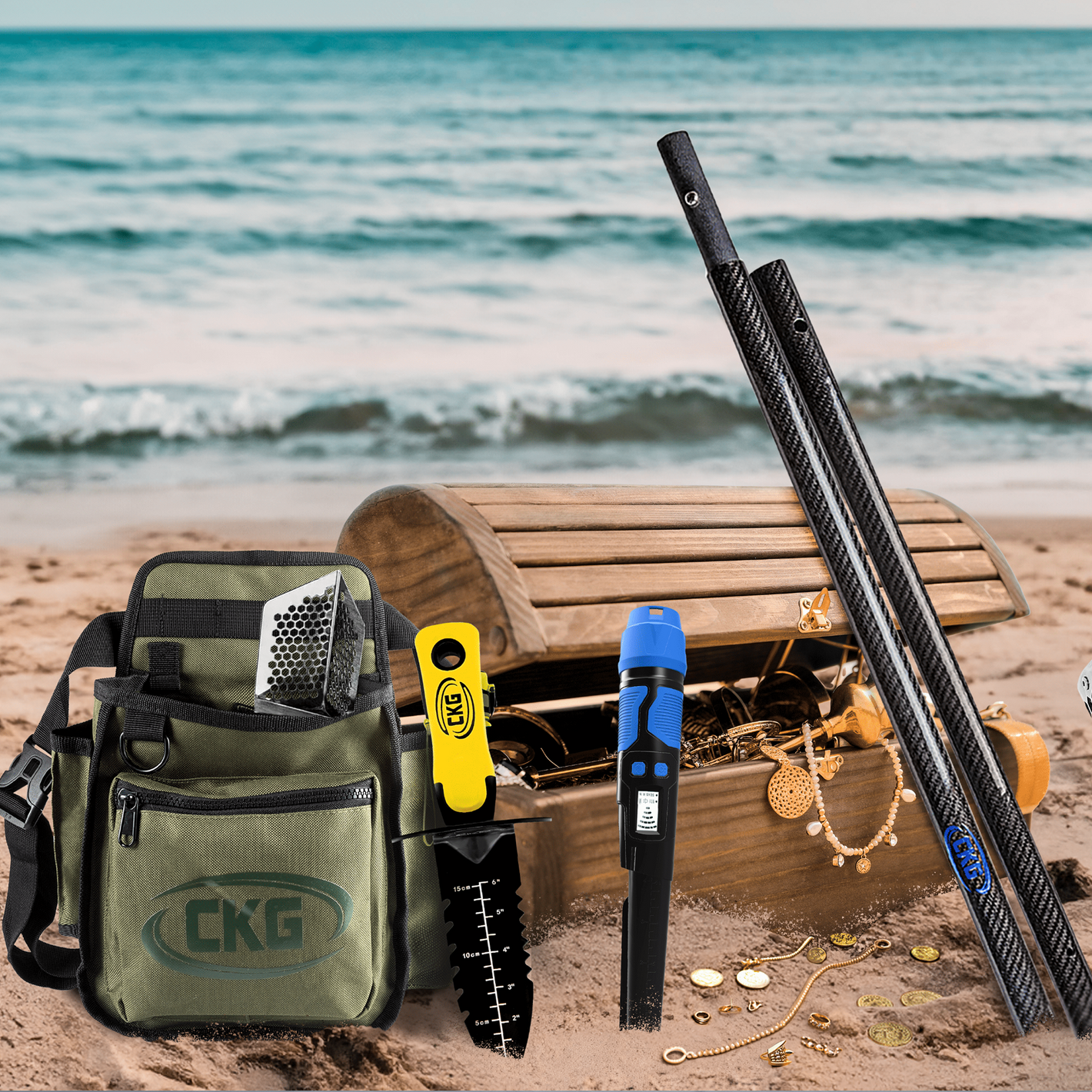
That is why reliable metal detecting accessories matter. A good setup helps you move naturally from signal to recovery without stopping every few minutes to rearrange your bag or clean up a messy dig. Whether you search on open land, old paths, dry soil, mixed ground or rough outdoor areas, your metal detecting gear should feel practical, field ready and easy to use.
This collection brings together metal detecting supplies for people who want a simple, useful and durable setup. Here you can choose metal detecting equipment accessories for clean target recovery, easy target retrieval, deep digging, soil cutting, plug cutting and trash separation. These are not random extras. They are the tools for metal detecting that make the whole process smoother from the first signal to the final check of the spot.
Why the Right Metal Detecting Gear Matters
A lot of beginners start with only the basic item and then quickly realize they need more support in the field. After a few trips, small details begin to matter. A comfortable grip matters when your hand is tired. A non slip grip matters when the ground is wet. A rugged and weather resistant design matters when the tool is used outdoors again and again. A protective cover matters when you carry sharp or heavy duty items with the rest of your gear.
This is where metal detecting field tools become important. They help you work with different ground conditions and reduce wasted effort. Some places need careful plug cutting, others require deep digging or stronger soil cutting. In rougher areas, a serrated edge, double serrated edge, sharp blade or root cutting edge can make the job easier. In softer ground, lightweight, compact and portable tools may be enough.
Good detectorist tools should not feel complicated. They should be ready when you need them, easy to carry and strong enough for outdoor use. The best setup is usually the one that feels natural after the first few hunts: organized storage, quick access, secure hold and hands free carry all make a noticeable difference.
Metal Detecting Essentials for the Field
Every hunter builds a personal setup over time, but most metal detecting essentials have the same purpose: to help you recover targets cleanly, safely and efficiently. A practical metal detecting tool kit usually includes items for digging, carrying, organizing and protecting your gear. The exact choice depends on where you search and how long you stay outside.
For short walks, compact and lightweight accessories for metal detecting may be enough. For longer hunts, durable and rugged metal detecting recovery tools become more important. If the ground is hard or full of roots, heavy duty materials and a strong ergonomic handle are worth paying attention to. If you prefer to stay mobile, portable gear for metal detecting with belt mounted carry or hands free carry can make the day much more comfortable.
Materials also matter. Stainless steel is a good choice when strength and long life are important. Aluminum can be useful when you want something lightweight and easy to carry. Carbon fiber is valued when you want a balance of low weight and a strong feel. Leather is often used where secure hold, protection and comfort are important. Each material has its own role, and the best metal detecting accessories usually combine strength, comfort and simple use.
Metal Detecting Recovery Tools
Metal detecting recovery tools are the part of the setup that you feel most during the search. They are used again and again, so they need to be comfortable, reliable and field ready. When the ground is soft, clean target recovery can be simple. But when the soil is packed, wet, rocky or full of roots, the quality of your recovery tools becomes much more obvious.
A good recovery setup should help with easy target retrieval without making unnecessary damage to the area. This is especially important when you want a cleaner search and a neater finish after each dig. Plug cutting, soil cutting and deep digging all require control. A comfortable grip, ergonomic handle and non slip grip make the work easier, especially when you are outside for several hours.
For tougher ground, a serrated edge or double serrated edge can help cut through roots and compact soil. A sharp blade and root cutting edge can save time when the target is deeper or harder to reach. At the same time, the tool should still be practical to carry. A protective cover, secure hold and organized storage help keep everything safe between searches.
Metal Detecting Digging Tools and Digging Kits
Metal detecting digging tools are chosen based on the ground, not just appearance. If you usually search in open areas, you may want something stronger for deep digging and rough soil cutting. If you prefer cleaner areas where the surface should stay neat, compact tools with better control may be more useful.
A metal detecting digging kit is a smart option when you want several items that work together. Instead of choosing each part separately, a kit can give you a more complete field setup. The idea is simple: everything should have a place, be easy to reach and help with clean target recovery. When your gear is organized, the search feels calmer and more efficient.
Good digging gear should feel solid in hand. Heavy duty construction gives confidence in rough ground. A lightweight design helps when you carry tools for a long time. A rugged surface, weather resistant finish and field ready build are important for regular outdoor use. The small things matter too: comfortable grip, non slip grip, belt mounted storage and quick access all affect how the tool feels during a real hunt.
Treasure Hunting Tools and Accessories
Treasure hunting tools are about more than digging. They help you move through the full process: searching, checking the spot, recovering the target, sorting the result and moving on. Treasure hunting accessories make this process cleaner and more organized. Without them, it is easy to mix useful finds with trash or waste time looking for small items in your pockets.
Treasure recovery tools should support both careful work and faster recovery. Some targets require patience, especially when the signal is close to roots or packed soil. Other situations need quick movement and easy target retrieval. A balanced treasure recovery setup gives you control in both cases.
For many detectorists, the most useful gear is not the biggest or most expensive. It is the gear that feels dependable after repeated use. Durable materials, field ready design, organized storage and hands free carry often matter more than flashy features. A simple but well-chosen metal detecting accessory kit can be more practical than carrying too many items that are rarely used.
How to Choose Metal Detecting Equipment Accessories
When choosing metal detecting equipment accessories, start with your real search conditions. Do you need deep digging, or mostly light plug cutting? Do you search in dry soil, rough outdoor areas or mixed ground? Do you prefer compact and portable tools, or do you need heavy duty gear for stronger recovery work?
Next, think about comfort. A comfortable grip and ergonomic handle make repeated digging easier. A non slip grip is helpful when your hands are dusty, wet or tired. If the item has a sharp blade, serrated edge, double serrated edge or root cutting edge, a protective cover is important. If you carry several items, organized storage and belt mounted access can save time.
Also think about weight. Lightweight gear is easier to carry for long sessions, but some conditions require more rugged tools. Carbon fiber, aluminum, stainless steel and leather all solve different problems. The right choice depends on whether you value strength, lower weight, protection or a more secure hold.
A good metal detecting accessory kit should feel like part of your routine. You should not have to think too much about where everything is. The best accessories for metal detecting are the ones that help you stay focused on the search.
Building a Practical Metal Detecting Tool Kit
A practical metal detecting tool kit should cover the full field process. It should help with target recovery, digging, carrying, protection and trash separation. It should also be easy to use in real outdoor conditions, not just look good in product photos.
For beginners, it is better to start with metal detecting essentials and then add more detectorist accessories later. A smaller setup is easier to learn. Over time, you will understand which tools for metal detecting you actually use and which ones stay in storage. Experienced detectorists often simplify their setup instead of carrying too much.
The goal is not to own every possible item. The goal is to have metal detecting gear that supports your style of searching. Durable recovery tools, compact field tools, organized storage, quick access and secure hold will usually make a bigger difference than unnecessary extras.